
Building an 18-Year Portfolio for My Son
July 14, 2026
Over the next few days/weeks, I’ll be sharing the portfolio I’m building for my son (on the Private Discord server)
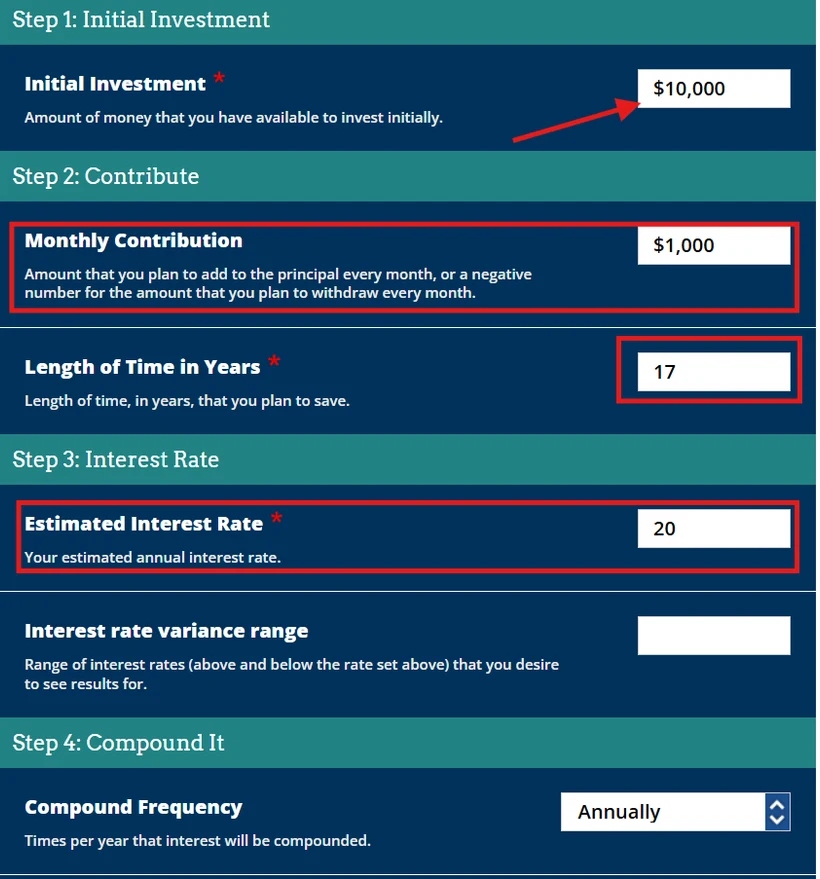
He’s only one year old, but my goal is simple: by the time he turns 18, I want him to own a portfolio that gives him financial freedom and a tremendous head start in life.
This won’t be a “buy once and forget it” portfolio in the sense of blind buying. But it will be untouched for the next 17 years. No trading. No panic selling. No rotating in and out of positions every time the narrative changes.
It will be built through consistent dollar-cost averaging over the next 17 years. Every month, I’ll invest money that belongs to him — his child allowance, birthday gifts, Christmas money, baptism gifts, and any other funds he receives throughout his childhood.
Most importantly, I won’t chase prices. I’ll add to these positions during corrections, periods of fear, and whenever the market offers us good entries. And I believe one of those windows may be coming very soon.
WHY I MAY START BUYING IN AUGUST–OCTOBER
I think there’s a real chance the market gives us a meaningful correction in the August–September–October window, and that’s exactly when I’d like to deploy the first tranches. Here’s my reasoning:
Seasonality. July is historically one of the strongest months of the year, but momentum fades hard after it. Going back to 1950, August averages roughly +0.1% and September is the only month with a negative average return (around -0.7%). Analysts are already flagging the risk of a seasonal correction that could pull the S&P 500 down toward the 7,000 area — roughly 8% below current levels.
Midterm election year. 2026 is a midterm year, and midterm years are historically the most volatile of the four-year presidential cycle. The average intra-year drawdown in midterm years since 1962 has been around 17% — materially deeper than in normal years. The volatility usually clusters in the months before the November election. That’s our window.
The Fed may be forced to hike, not cut. Inflation hit 4.2% in May, the highest in three years, driven by the energy shock from the Iran conflict and sticky services inflation. Markets are now pricing roughly 76% odds of at least one rate hike by the December Fed meeting. A new Fed chair facing his first credibility test, rising long-end yields, and a historically thin equity risk premium — that’s a combination that compresses valuations, especially for growth stocks. (I give this scenario like 10% chances)
Narrow breadth and stretched positioning. The index sits near all-time highs, but the median stock is well below its 52-week peak. Household equity exposure is at record levels. When leadership is this concentrated and everyone is already positioned, small catalysts produce outsized drawdowns.
A wave of massive IPOs absorbing liquidity. SpaceX listed in June in the largest public offering in history, and OpenAI and Anthropic are expected to follow later this year. Trillions in new equity supply competes for the same pool of capital — historically, heavy IPO windows have coincided with local market tops.
To be clear: I’m not predicting a crash, and I’m not waiting on the sidelines forever. If the correction doesn’t come, I’ll simply start DCA-ing on schedule. But if fear shows up in September or October, I’ll be greedy. For a 17-year portfolio, a 15–20% drawdown at the starting line is a gift, not a threat.
INITIAL PORTFOLIO ALLOCATION
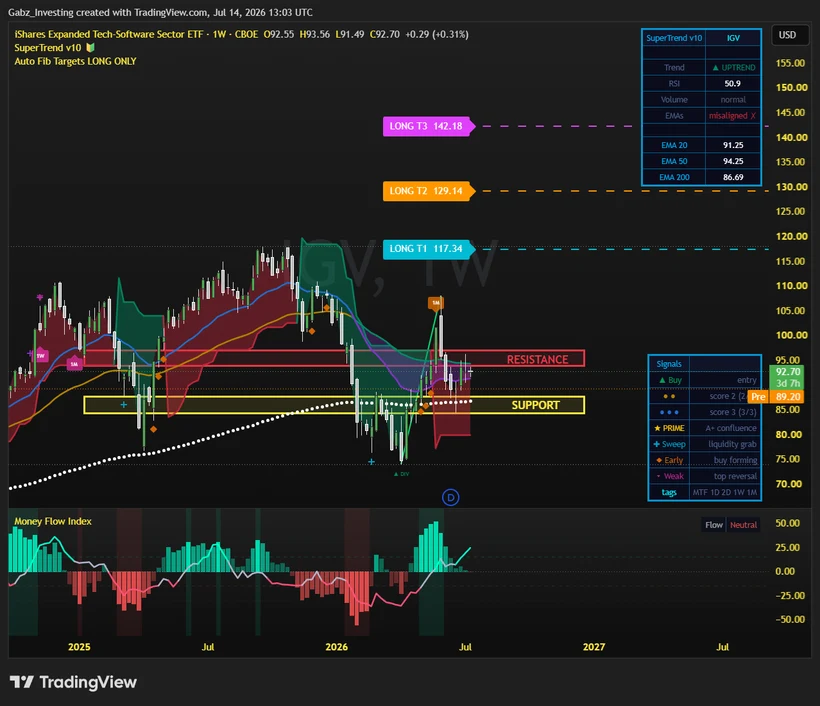
15% – iShares Expanded Tech-Software ETF (IGV) A diversified basket of leading software companies. Instead of trying to pick every future winner in software and enterprise AI, I’d rather own many of them through a single ETF. This gets one of the largest weights precisely because it removes single-stock risk from the biggest theme of the next two decades. The chart supports it too: IGV is one of the few names here in a confirmed weekly uptrend, holding above its support zone around 83–88, with money flow firmly positive. Any correction back into that support band is a level-one accumulation zone for me.
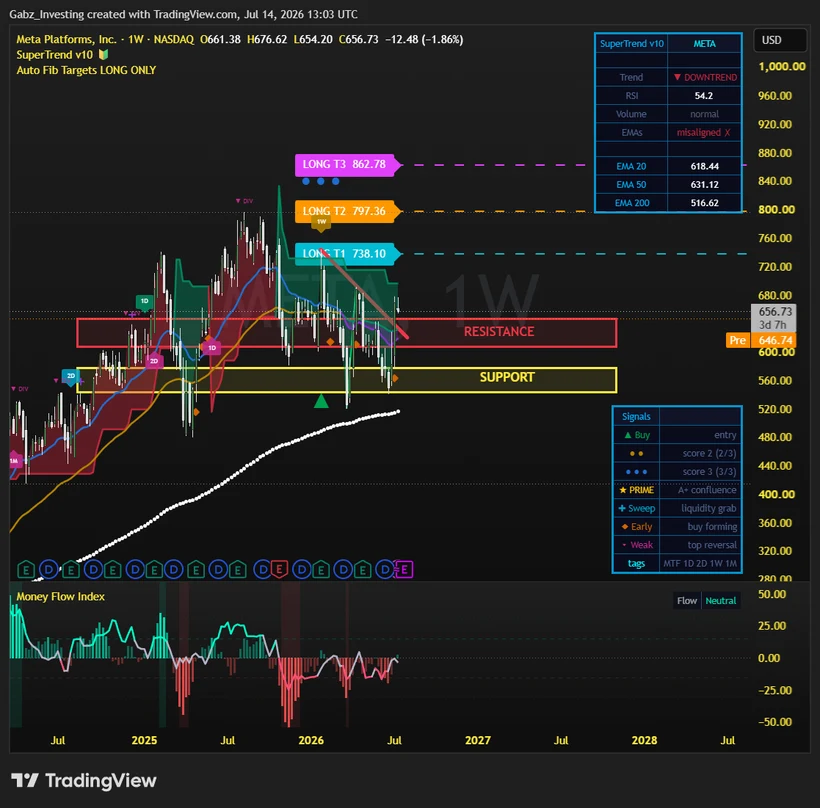
14% – Meta Platforms (META) AI infrastructure, one of the largest compute clusters on Earth, WhatsApp monetization, advertising dominance, and one of the strongest cash-generating machines in the world. The weekly chart shows price at roughly 657 after reclaiming the former resistance area around 600–640, with a broad support shelf near 540–580 below. If the autumn correction drags META back into that 540–580 zone, that’s where the heaviest tranches go.
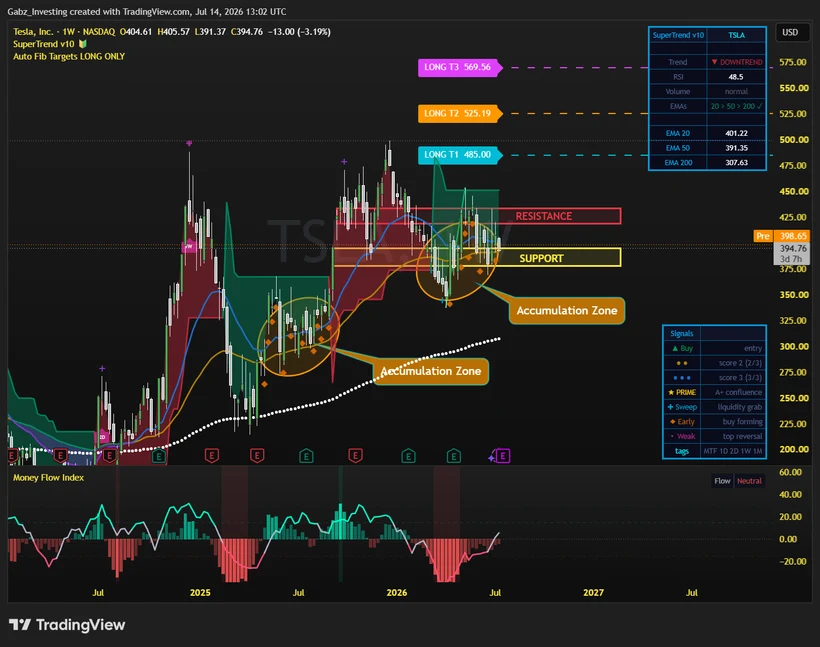
13% – Tesla (TSLA) The company I have the highest conviction in over the next two decades. AI, autonomous driving, robotics, Optimus, energy storage, and manufacturing innovation make Tesla much more than an automaker. The weekly chart is already handing us the playbook: price around 395 is sitting inside a second accumulation zone, right on the support band near 375–400, with the 20/50/200 EMAs still stacked bullishly underneath. The first accumulation zone in this range resolved higher. I don’t need to guess the bottom — I’ll ladder tranches through this zone and add aggressively if a correction sweeps the lows.
Subscribe to unlock the premium content
The rest of this article is for Gabz Investing members on Patreon.
Unlock on Patreon →